
By Cheri Rae /Education Correspondent
The constant stream of cruel, unusual and uninformed commentary spread by the convicted felon in the White House is so overwhelming, to so many, it’s often simply ignored without the outrage that would occur in normal times.
But when the guy who has so much trouble reading, writing, spelling and processing the English language—all characteristics of dyslexia—decided to pontificate about dyslexia he stirred up more controversy than most of his wrong-headed statements.
And rightly so.
Not that facts ever seem to matter, but he probably didn’t realize that dyslexics comprise 20 percent of the population. Add in all those who love and support them—and vote—and there’s a lot of pissed-off people. Even ones who formerly supported him.
Our story to date. For those who missed it, Trump last week drew widespread criticism after he slurred political rival Gov. Gavin Newsom, who has spoken and written openly about his struggle with dyslexia: “A president should not have learning disabilities,” he said at the White House, adding that “everything about (Newsom) is dumb.”
As one of millions of “Dyslexia Warrior Moms,” forced to fight for our dyslexic children—and yours—just to be taught to read, I’m reminded once again about the level of misinformation about dyslexia. Despite so much research, so many lists of successful dyslexics, so many dyslexic role models who speak out about the strengths and challenges of this complex learning difference, we’re constantly defending, correcting, and advocating to those who continue to believe dyslexia = dumb.
The worst part of it is the effect of this commentary on stressed-out and struggling dyslexic children who believe it’s true.
Far too many students who struggle to read, even those in the elementary grades, are wrongly convinced they are not as smart as their peers and never will be. They conclude early on that they will never reach their dreams of becoming a scientist, a ballerina or a physician—little kids have actually been that specific in conversations we’ve had.
Hearing the President of the United States confirm their worst fears does incalculable damage to their already-low self-esteem.
It’s tough on those kids in school who are all-too-familiar with the challenges of dyslexia and are never taught about the strengths that come with it or the accomplishments of so many successful dyslexic role models who think and learn like they do.
And it’s tough on their parents when they finally realize that in public school, their dyslexic children are unlikely to learn to read proficiently or without unnecessary struggle. Those who can afford to pay for specialized private tutors dig deep into their pockets; those who can’t pay agonize, advocate and hope for the best. Their children will likely not reach their full potential, even though they were perfectly capable of learning to read when properly taught.
Through no fault of their own, their reading difficulties will further perpetuate the painful stereotype that made the news.
Decoding Dyslexia. In 2011, the grassroots parent group, Decoding Dyslexia, was formed in New Jersey to “raise dyslexia awareness, to empower families to support their children and to inform policy-makers on best practices to identify, remediate and support students with dyslexia.”
Thanks to social media, the message spread quickly as chapters were formed across the country and literally around the world. Like-minded parents were able to share their dyslexia stories and learn from each other, connected in a powerful network as never before.
The group adopted the motto, “Educate, Advocate, Legislate,” and it has proven success in getting dyslexia laws passed across the nation—even in long-resistant California.
However, laws on the books depend on local practices, policies and procedures. Too often, parents must intervene and advocate strongly just to have their child’s dyslexia identified, much less properly addressed in the classroom. Too few administrators and educators have sufficient knowledge about the dyslexic brain and how it learns to implement best practices in dyslexia instruction.
It’s bad enough when you have to fight with the local school district to properly educate dyslexic students; it’s made worse when the misunderstanding and misinformation extends all the way to the White House.
It doesn’t have to be this way. The website for Fairfax County Public Schools in Fairfax, Virginia, offers a straightforward and comprehensive approach to dyslexia resources. My experience with that district is limited to one family with a dyslexic second-grader who desperately wanted to move to Santa Barbara. But they needed evidence that their child would continue to receive an excellent education if they did.
After more than a year of research, consultation with administrators and meeting with local parents, they realized that their dyslexic child’s needs could not and would not be accommodated in Santa Barbara Unified, as they were in their previous school district, and for that reason decided to move to the Bay Area instead.
Key resources. To counteract the inaccurate comments that have made the news, education at all levels is the answer. Fairfax County offers an an example of how local school districts can provide access to dyslexia information for parents and a more appropriate education for dyslexic students.
It’s inexcusable that—despite decades of advocacy in this community—dyslexia remains so easily met with a collective shrug and an ill-defined patchwork of approaches in the educational establishment. And the sizable number of dyslexic students simply drift through school, without benefit from what is known about how to teach them.
As my own dyslexic son observed, “I just think school isn’t made for kids like me.”
We have access to an incredible amount of research and resources so close to home:
The internationally renowned researcher, prolific author and brilliant lecturer Dr. Maryanne Wolf founded and runs the UCLA Center for Dyslexia, Diverse Learners and Social Justice ;
In the Bay Area, an interdisciplinary approach to dyslexia research is the focus at the UCSF/UCB Schwab Dyslexia and Cognitive Diversity Center;
And farther away, the long-established Yale Center for Dyslexia and Creativity, established by the esteemed Drs. Sally and Bennett Shaywitz, remains a mainstay in dyslexia research. Its mission: “to illuminate the creative and intellectual strengths of those with dyslexia, to disseminate the latest scientific research and practical resources, and to transform the treatment of all dyslexic children and adults.”
Ultimately, making the ill-considered and uninformed comments about dyslexia was a serious political miscalculation, one that seriously denigrated a smart, sizable and group quite accustomed to standing up and speaking truth to power. Even some of the former MAGA-supporting Dyslexia Warrior Moms are expressing fury with him for being dumb enough to mess with our kids.
And for the record: If he ever were elected to the Presidency, Newsom would not be the first dyslexic to serve. He would be joining the very good company of George Washington, Thomas Jefferson, Woodrow Wilson, John F. Kennedy, Dwight D. Eisenhower and Lyndon Johnson—all who overcame their struggles with dyslexia and served their country well.
Cheri Rae is the director of The Dyslexia Project and the author of DyslexiaLand: A Field Guide for Parents of Children with Dyslexia. You can reach her at TheDyslexiaProject@gmail.com.
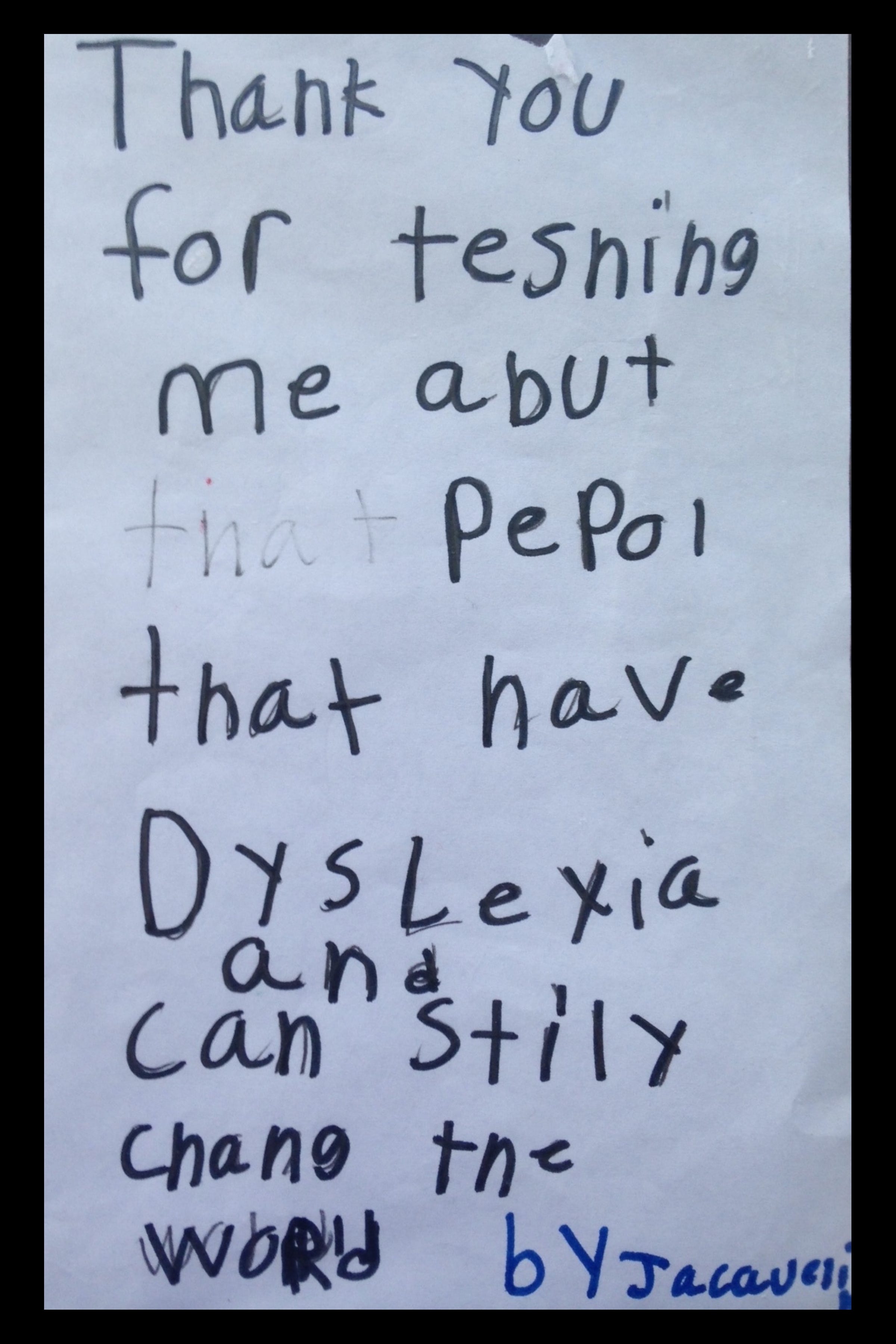
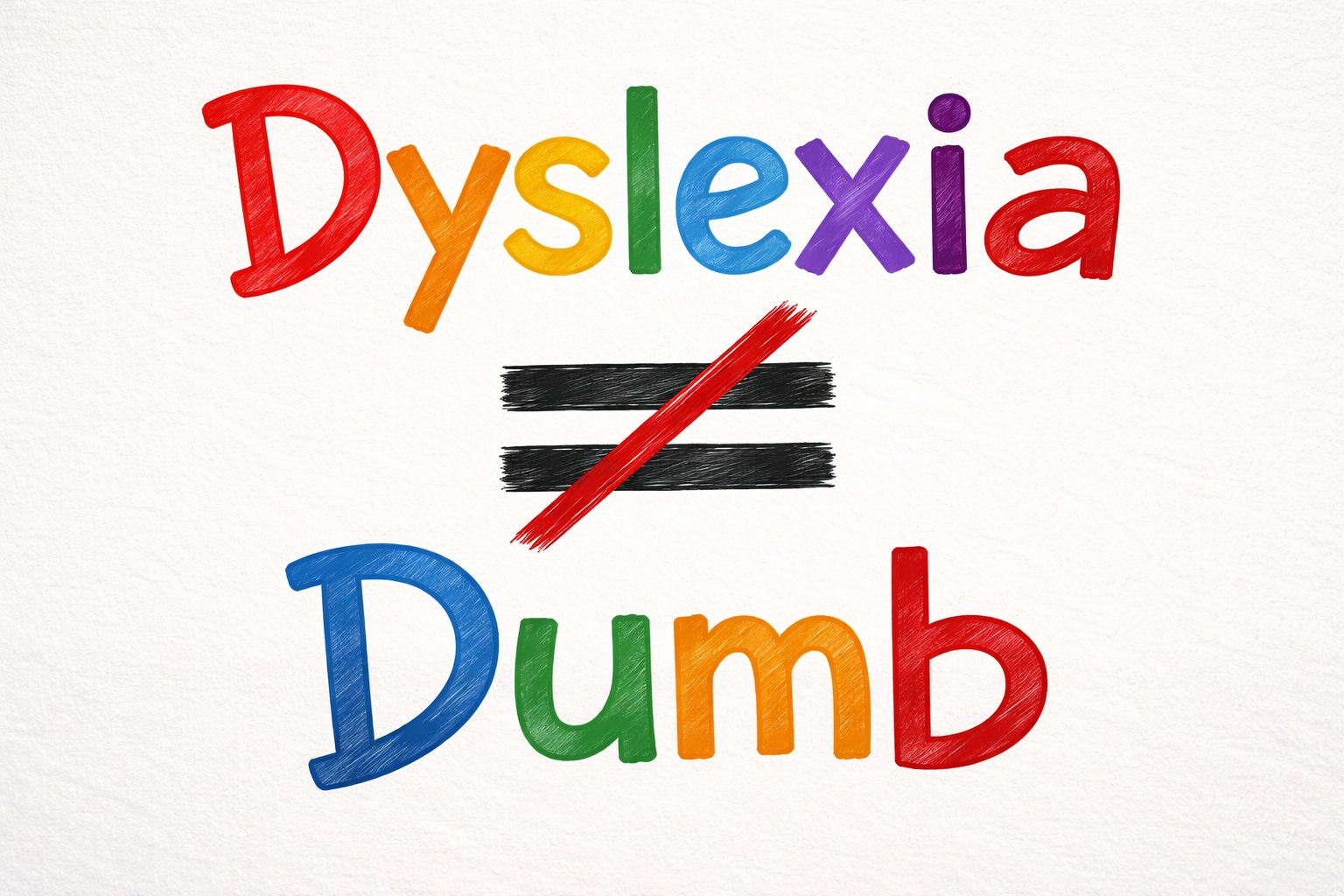
Images: Sign generated by AI; A thank-you note a third grade girl sent Cheri after she spoke about dyslexia to her class.